

March 18, 1996. The 9:30 Club, Washington, D.C.
Somebody introduced me to Josh Clayton-Felt that night. I walked in not knowing the name. I walked out chasing everything he'd ever made.
Small stage. Him and a guitar for stretches of it. You know the moment a room stops shifting in its seats and starts leaning in. That happened.
He's been on my playlist ever since. Every record, in order, as they came. Then he was gone. Thirty-two. January 2000.
Of all of it, one is where I keep landing. "Too Cool For This World." He finished it while he was dying. It reached me after he was gone.
The title sounds like a compliment. It isn't. It's about someone so walled off that beauty can't get through -- the world holding out its hand, the man unable to take it. Then you remember where he was standing when he wrote it, and it turns over in your chest.
I don't go back for the story. I go back for what it means to me. That reason outlasts the rest.

Here's the part I keep circling. A playlist is a time capsule. Every song filed under the day it found you. The car. The room. The person you were then. It doesn't ask permission. Put it on and it just runs.
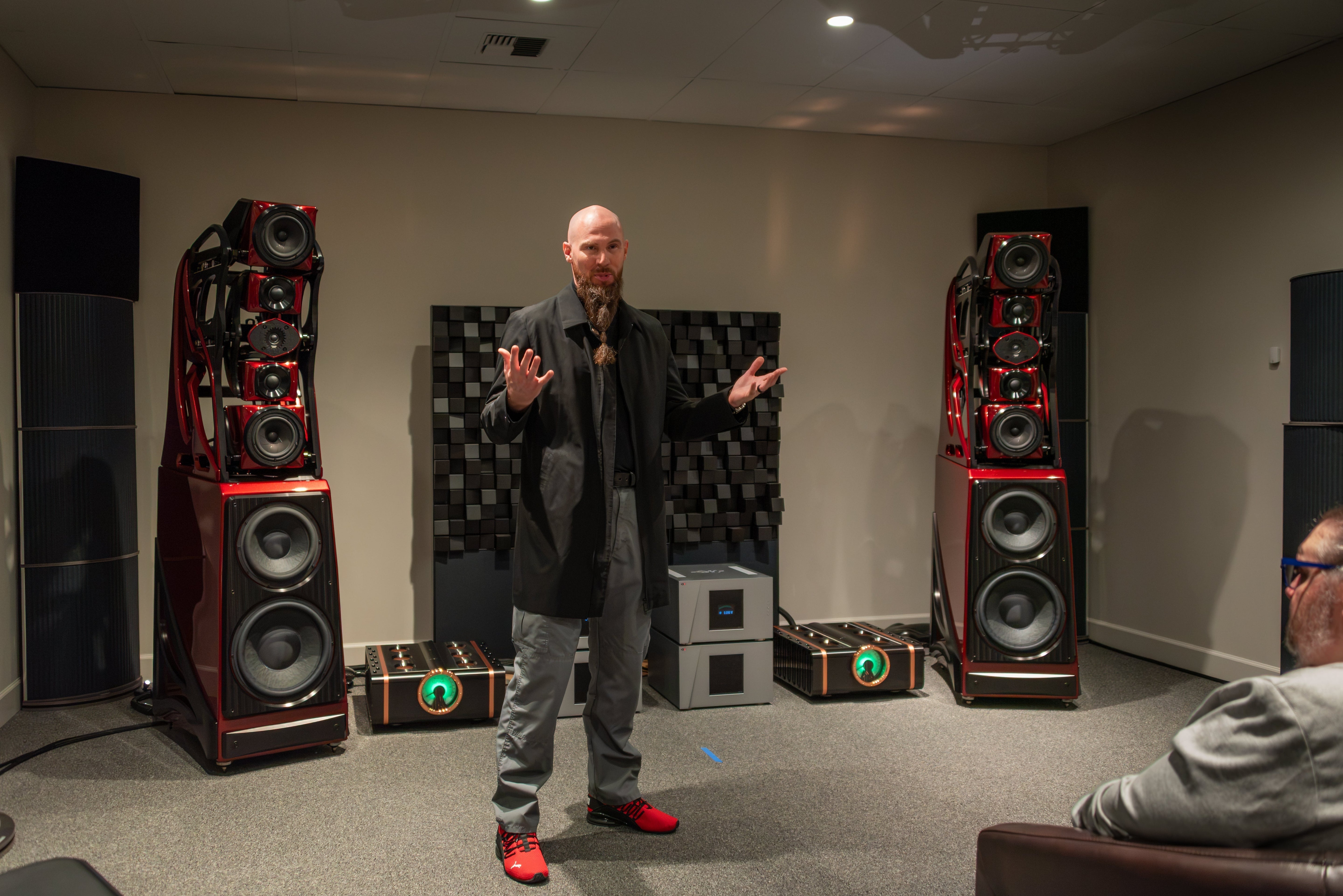
This month Daryl Wilson sat with us in Graceland and we listened to the Autobiography.
A speaker named for what it does. Bring in the music you've carried for thirty years and it hands back the version you couldn't hear the first time. The song doesn't change. You do. The room lets you catch up to it.
Discovery. The pause. The time capsule.
Add them together and something arrives that none of them carried alone.
Mine was a kid on a small stage in 1996. I just didn't know yet how long he'd stay.
The Room
It's been a few years since we first said the word "experience center" out loud. Then longer still turning a showroom into one. Graceland was the last room to open, and the one we took the most time to get right.
Now it's ready.

Why Graceland
Paul Simon didn't go to Johannesburg to lead anything. He'd worn out a cassette he couldn't reverse-engineer at home. He heard something he couldn't make alone.
Bakithi Kumalo played the bass line in one take. Forward. Once. Then Roy Halee turned the tape over and spliced the second half backward -- the part everyone's tried to copy since and nobody can play.
The bassist played. The engineer flipped it. Simon left the hole open long enough for both.
The record works because nobody tried to be the whole record.
That's the name on the room, and it's the right one. Graceland holds a lot of things -- brands, systems, a team of people who have spent decades understanding them -- but it works because none of it is trying to be the whole answer. It is trying to be the right one for you, on the day you walk in.

How It Happened
About a year before Graceland opened, I was walking Mr. Grace -- one of our longtime clients -- through the new Bellevue space. We had a plan: reference room up front, projector shootout in the middle, loose ideas for the back. As we wrapped up, he stopped, looked around the far back room, and asked one question.
"Why wouldn't this be your reference room?"
That stuck. He was right. We pivoted.
We improved the acoustics. We hung the art. We developed the Projector Shootout -- the only calibrated, repeatable comparison of reference projection systems anywhere in the world. We put in the coffee machine. None of it is small. It adds up to a place people want to stay in.
The room is named for that moment. And for him.
What's Inside
The Wilson Audio Autobiography sits at the center. One of only 7 pairs in the world. We are the only Wilson Audio dealer in the Pacific Northwest, and have been working with Wilson since 1994.
Around it: dCS. D'Agostino. Innuos. CH Precision. Döhmann turntables. Shunyata and Transparent running through all of it.
Not one answer. A shelf of them. Every system, every path, every question a listener might bring in has something waiting for it in that room.
The Autobiography is where the room is right now. It got here through a journey: the Bowers and Wilkins Nautilus first, then the Octave Monoblock Jubilee, then the Döhmann Helix arrived and brought analog into the conversation at the reference level, then the Momentum Z, and now this. Every arrival raised the ceiling. Every arrival taught us something about what the room was capable of.
The Autobiography was always where it was heading.

What You Actually Hear
Not a song. The breath before the singer takes the line. The bow leaving the string. The rasp in a voice you've heard a thousand times and never actually heard. The space between the players. The room the session was tracked in.
That is the musicality. The thing under the song.
Most systems give you music. Graceland gives you the original event.
Come In
There is no agenda. No pitch. No checklist.
Bring a record, a playlist, or nothing at all. Your Definitive expert brings the rest. You sit. You listen. If something stops you -- a detail you've never caught before, a stage that opens wider than you thought a room could hold -- that's where the conversation starts.
Some people stay an hour. Some stay an afternoon. Nobody has left the same way they arrived.
Graceland is ready. Reach out to your Definitive expert and we'll find the time.
Share:
The All New Strato K
Graceland: Deep Dive