

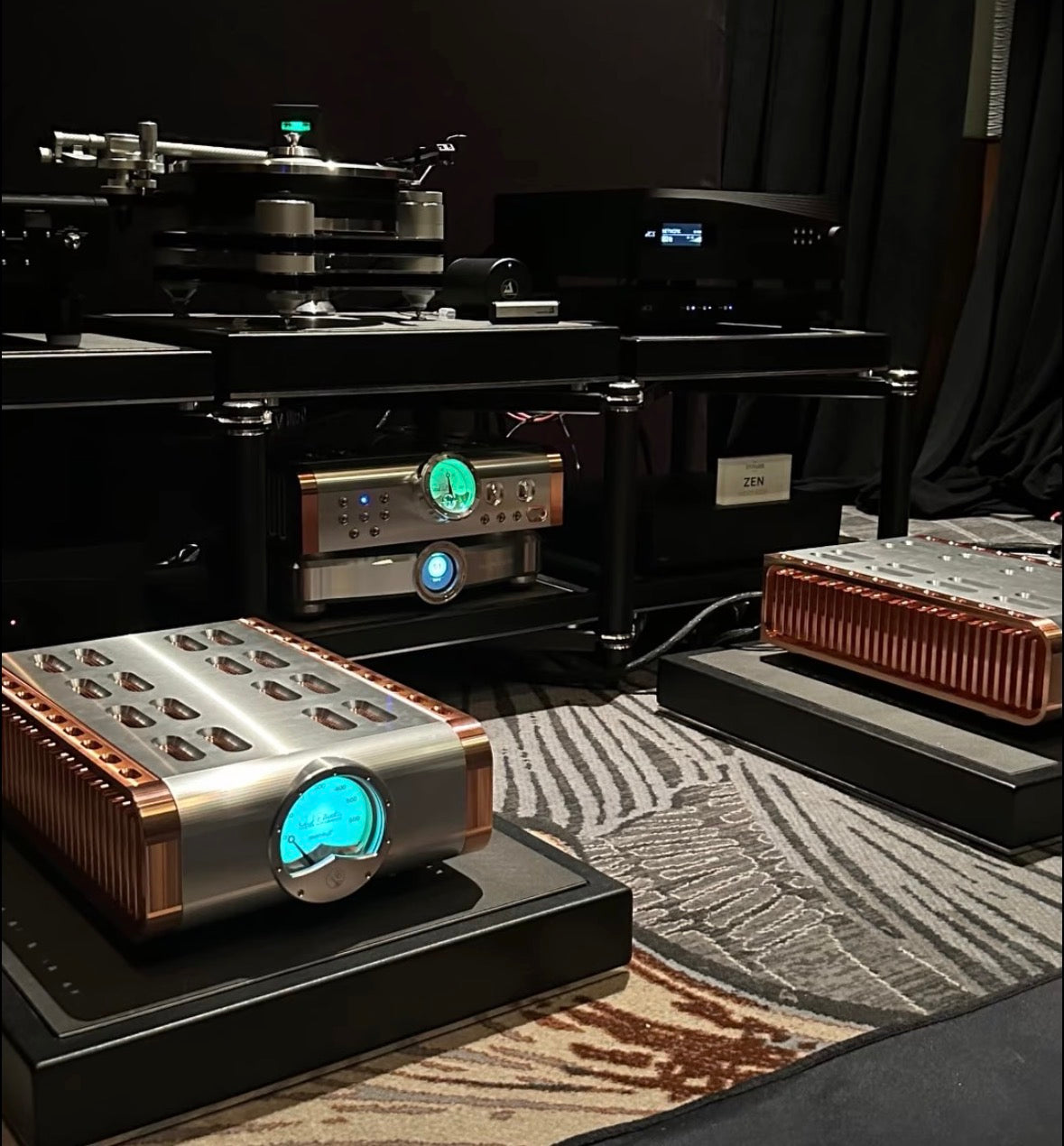
There's a version of high-end audio where every component is chosen individually, optimized in isolation, and assembled into a system that — in theory — should work. And then there's the version where two components are designed to function as one. The Dan D'Agostino Momentum C2Z Preamplifier is the second kind.
Announced April 10, 2026, the C2Z is a new addition to Dan D'Agostino's Momentum Series — not a replacement for the Momentum C2, but something more specific than that. It's the preamplifier the Momentum Z Monoblock Power Amplifier was waiting for.
Why a New Preamplifier?
When D'Agostino introduced the Momentum Z Monoblock, they did something unusual with the amplifier's input stage: they intentionally lowered its input impedance. In most FET-based designs, high input impedance is considered a feature — it reduces loading on the source and preserves signal integrity. The Z amplifier flips that logic deliberately. By drawing more current from the preamplifier, it creates a stronger, more direct electrical coupling between the two components.
The problem: the Momentum C2, exceptional as it is, wasn't designed to deliver current at that level. You were getting most of what the Z Monoblock could do. Not all of it.
The C2Z fixes that.
What Changed
The core of the C2Z is a redesigned output stage built around a current-capable field-effect transistor architecture. FETs are well suited to high-performance audio — high input impedance, low noise, excellent linearity, smooth transfer characteristics. What D'Agostino has done is engineer an output stage that pairs precisely with the Z amplifier's intentionally demanding input: a preamplifier that can deliver current with precision, feeding an amplifier designed to receive and use it.
In Dan D'Agostino's own words: "We set out to do more than refine an already exceptional platform — we wanted to fully exploit the performance of the Momentum Z Monoblock circuitry. We have created a more direct and optimized connection between preamplifier and amplifier."
That directness is the point. The C2Z isn't adding warmth, or sweetness, or any other audiophile adjective that means something was altered. It's removing an electrical bottleneck that was limiting what you could hear.
What You Actually Hear
The most immediately noticeable improvement is in the low frequencies. Bass gains texture, control, and dimensionality — qualities that tend to disappear at lower listening levels in lesser systems. With the C2Z driving the Momentum Z, low-frequency articulation stays precise and defined even when you're not playing loud. The subtle distinction between a plucked upright bass and a bowed one. The decay of a kick drum in a live recording. The detail that's always been in the recording but rarely makes it out the other end intact.
Beyond the bass, the combination improves transient response and dynamic contrast across the full frequency range. Music sounds more immediate. More present. The space between notes carries information rather than just silence.
Together, the C2Z and Momentum Z form what D'Agostino describes as a unified system — and that's exactly what it sounds like. Not two components with a cable between them. One continuous signal path, optimized end to end.
Fifteen Years of Momentum
The Momentum Series has been in production for fifteen years. In that time it has expanded into the Relentless, Progression, and Pendulum lines — each a continuation of the same design philosophy that made the original Momentum amplifier a reference standard. The C2Z is the latest expression of that legacy: not a reset, not a rebranding, but a purposeful step forward driven by a specific engineering goal.
This is what fifteen years of refinement looks like. Not a new product for its own sake. A component that exists because the amplifier it was designed for demanded it.
Share:
We've Been Here Before
Hello Darkness, Your Old Friend